mental health info platform
Harmonia Mentis is a digital platform by Angelini Pharma designed to provide healthcare professionals with reliable and relevant content about mental health. The project in Havas CX, was focused on improving the overall user experience, simplifying the information architecture, and creating a scalable design system that could support the platform across multiple European markets.
SERVICE
UX DESIGN
role
User Experience Designer


1. Concept & Intentions
As the platform evolved, the existing structure no longer fully supported the needs of its users.
The challenge was to reorganize content, identify new opportunities for information delivery, and create a scalable architecture capable of supporting different user needs across several European markets.
Key challenges included:
Improving content discoverability
Reducing information overload
Supporting different medical specialties
Enabling content personalization
Creating a structure suitable for future growth
2. Research & Approach
1.2 — Co-design & Ideation
We organized a series of co-design workshops involving stakeholders from different European markets. The workshops were an important part of the process, helping us bring together different perspectives and align business, market, and user needs.
Through collaborative exercises, we explored user profiles, content priorities, navigation needs, and possible ways to organize the platform. We also worked on defining the most relevant content and features for different types of healthcare professionals, including psychiatrists, general practitioners, neurologists, and medical students.
The outcomes of the workshops helped us identify common needs across markets while also highlighting local differences that needed to be considered in the final solution.
2.3 — Information Architecture
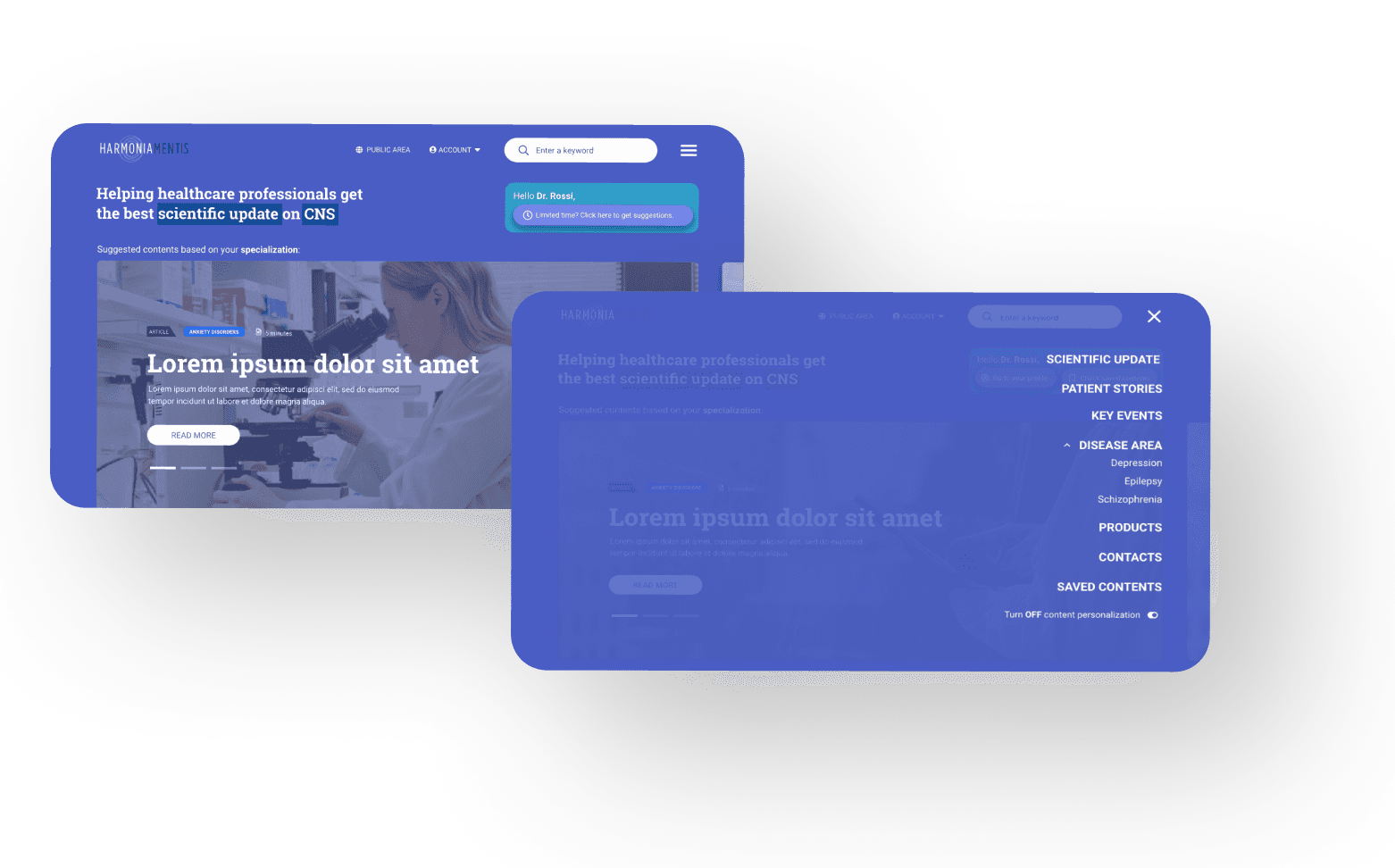
Based on the research and workshop outcomes, we redesigned the information architecture and navigation system.
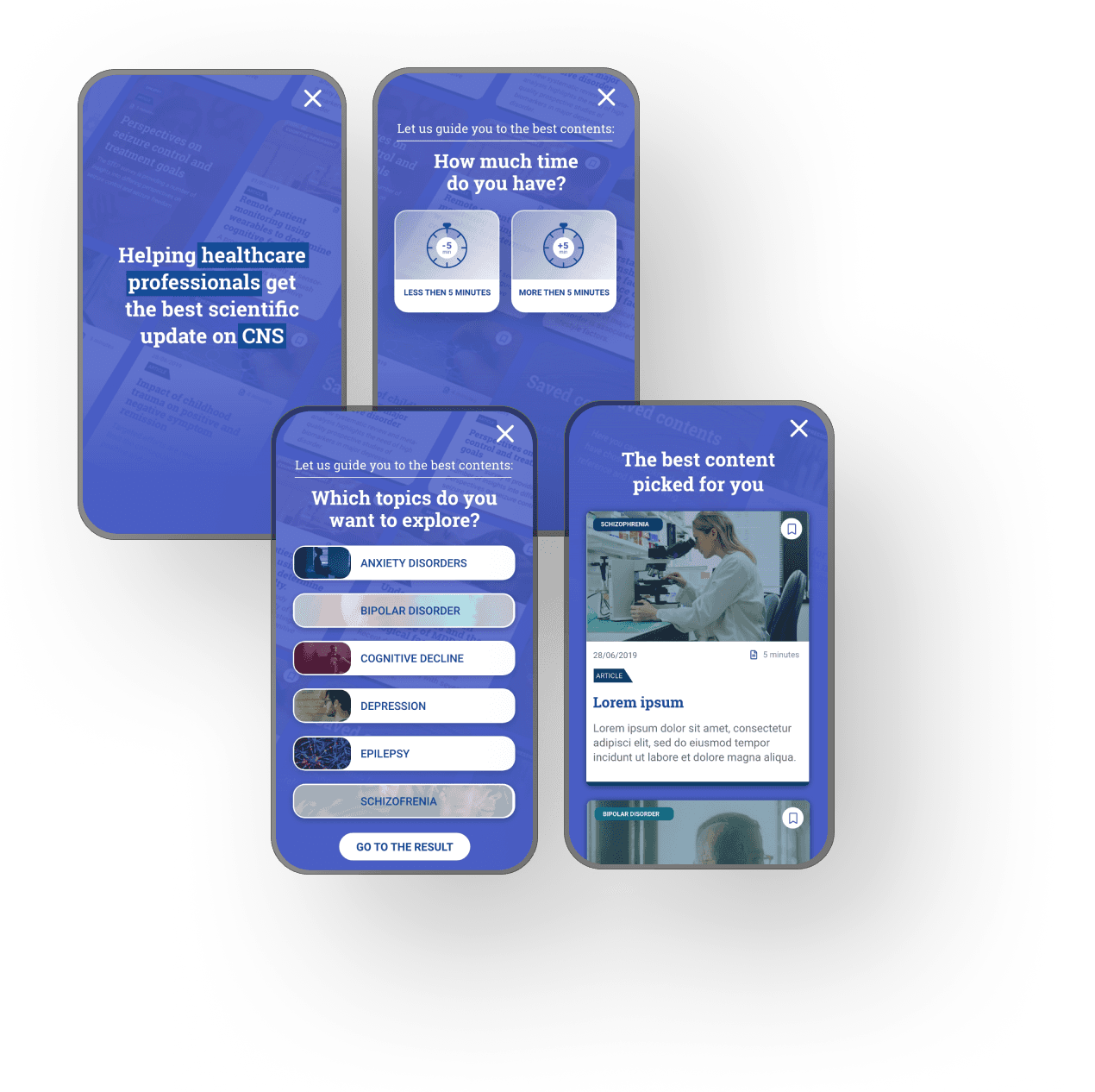
The goal was to make the platform easier to explore and help users quickly find relevant content. We also introduced a more personalized structure based on users' professional needs and interests.

3. Design & Testing
3.1 — Wireframing & Prototyping
We translated the new structure into wireframes and interactive prototypes, progressively defining the main user flows and page layouts.
The prototypes allowed us to visualize and validate the proposed experience before moving into the final UI design.
3.2 — Design System & Mockup
A modular Design System was created to ensure consistency across the platform and make the experience easier to scale across different markets.
Using an Atomic Design approach, we defined reusable components, patterns, and guidelines that could support future iterations and new content.
4. Testing
4.1 — Usability Testing
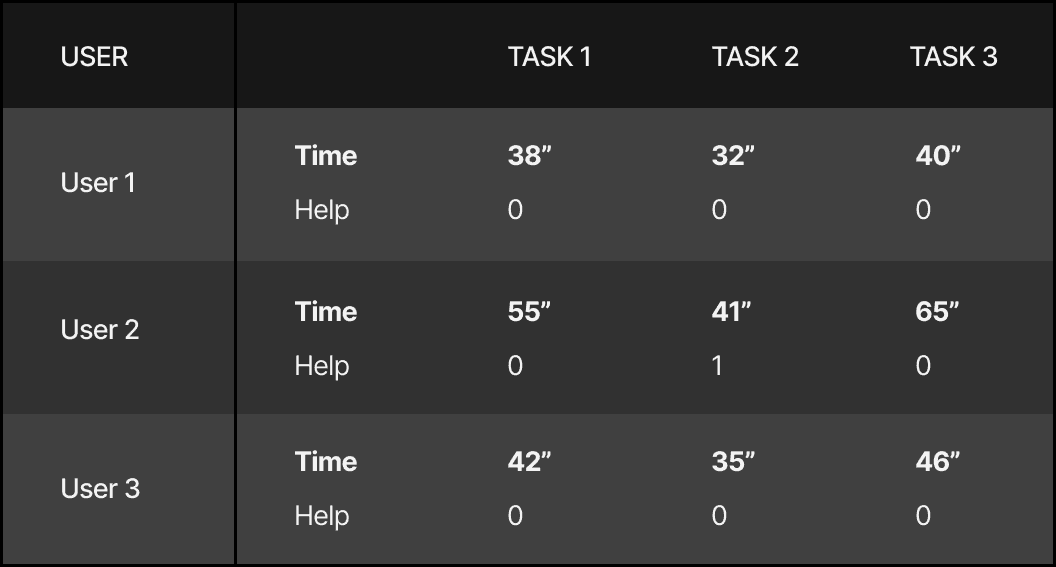
The interactive prototype was tested with healthcare professionals to understand how effectively the new experience supported their needs and to validate the main design decisions.
During the sessions, participants were asked to complete realistic tasks, such as finding specific medical content, navigating through the new information structure, and exploring personalized areas of the platform.
We observed how users interacted with the prototype, where they encountered difficulties, and which elements felt intuitive or unclear. Their feedback provided valuable insights into the navigation, content hierarchy, labeling, and overall usability.
The findings were then used to refine the experience and address the main usability issues before moving towards the final design.