food-based dating app
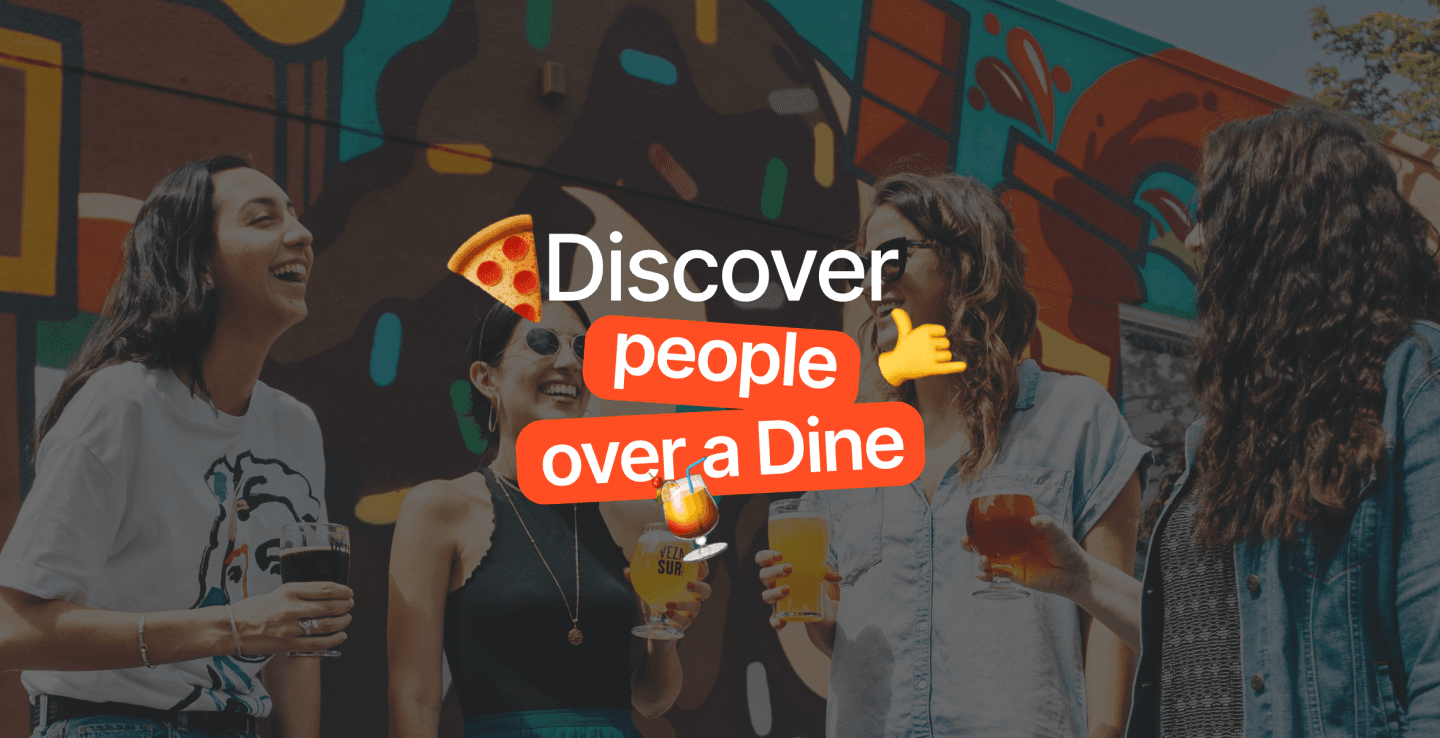
In Havas CX we work on DineMe a social dining app where people create or join dinner invites, sharing food and experiences with someone new.
SERVICE
UX RESEARCH / INFORMATION ARCHITECTURE
role
User Experience Designer & Researcher

1. Concept & Intentions
DineMe is a social dining platform built around a simple, playful mechanic: users create dinner appointments and invite others to join them, or browse and request to be invited to someone else’s — sharing food and experiences along the way, whether that means treating or being treated. The goal was to design this exchange so it felt fun and low-friction, turning food into the icebreaker for meeting new people rather than relying on a traditional matching mechanic.
2. Research & Approach
We structured the discovery and design process around the Double Diamond framework, moving from an open problem space to a validated, testable product.
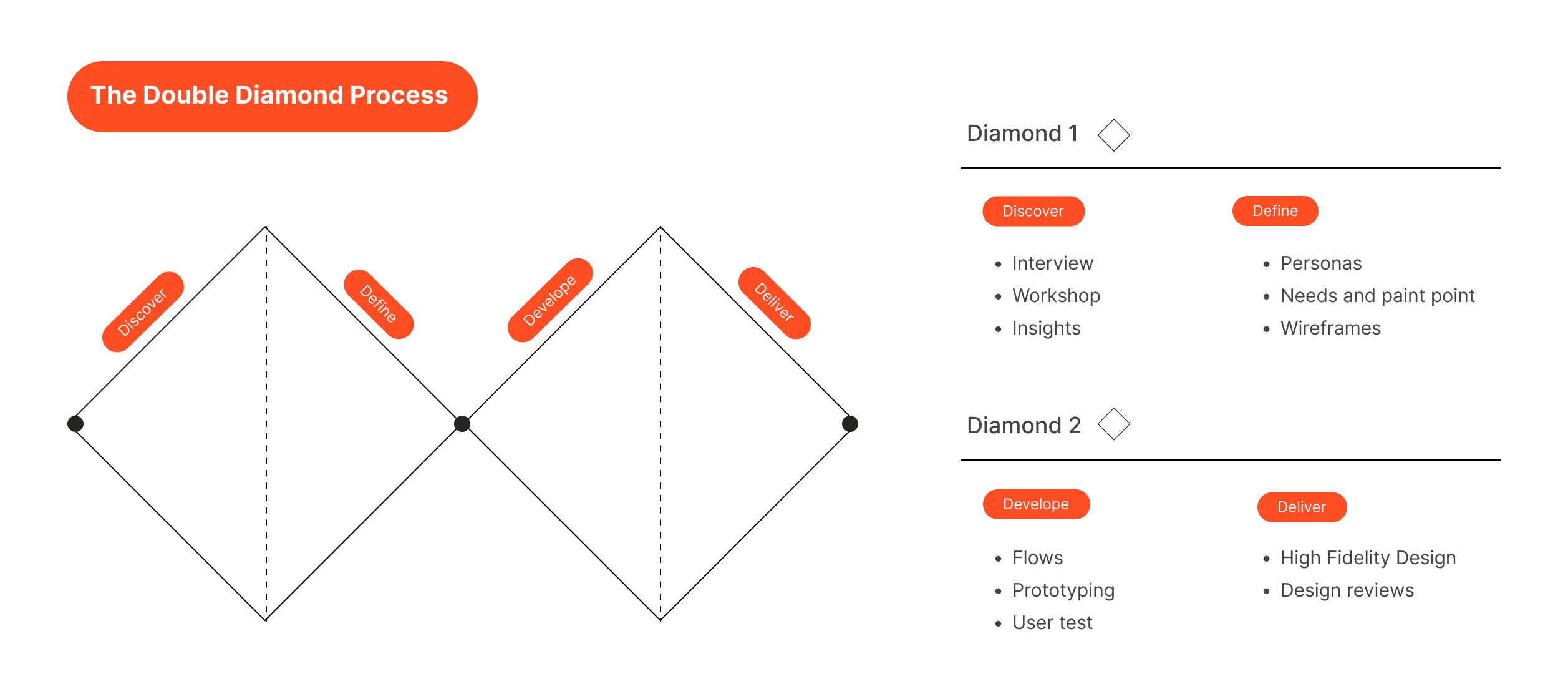
// Discover: we ran a competitive analysis spanning two categories — dating apps (Tinder, Bumble, Hinge) and restaurant-discovery platforms (TheFork, TripAdvisor, Google Maps) — to understand where DineMe’s invite-and-join model sat between the two. This was paired with semi-structured user interviews, conducted independently, exploring how people decide whether to host or join a dinner with someone they don’t know yet.
// Define: Synthesizing the research surfaced a few key insights: people evaluate the host or guest behind an invite before deciding whether to join; the “treating/being treated” dynamic needed to feel transparent and unpressured rather than transactional; and numerical ratings felt reductive for judging a shared social experience. These became the design considerations woven into the core invite-and-join flows.
// Develop: based on these insights, we defined the information architecture and mapped five core user flows together with the design team — onboarding, navigation, invite discovery, invite creation, and profile.
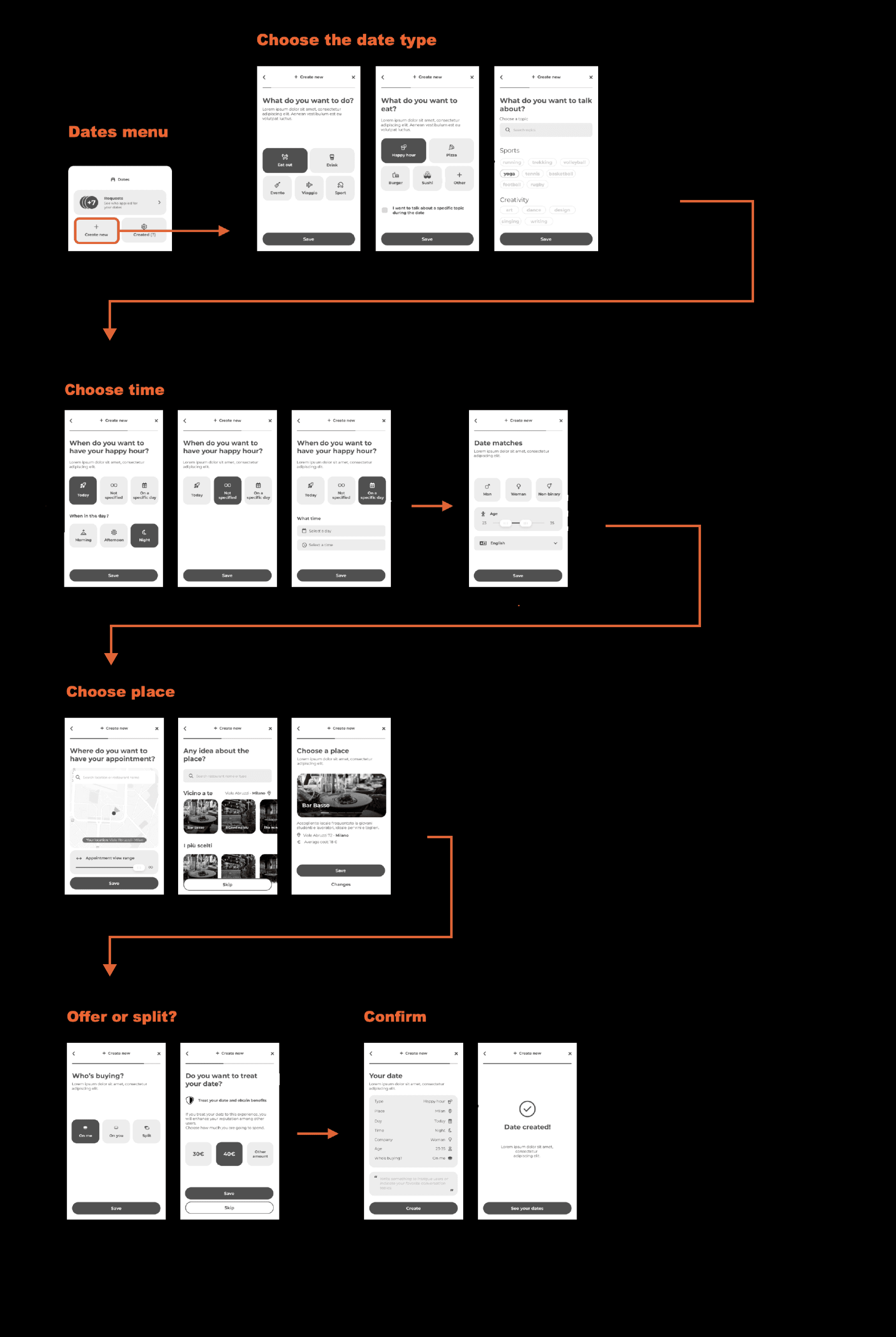
// Deliver: we built wireframes for the key screens within each flow together with the design team (sign-up, profile setup, reporting, invite creation) as a testable prototype.
3. Design & Testing
With wireframes in place, we validated the flows through moderated usability testing with 5 users, using a think-aloud protocol. Testing showed that the reporting feature lacked visibility, and that some irreversible actions (like confirming an invite) caused hesitation without clear feedback. We iterated on the wireframes to improve the visibility of reporting, simplify the invite-creation sequence, and add confirmation states for critical actions.


Outcome
The project ended before the final release, but the Double Diamond process — from competitive research through to tested wireframes — gave the team a validated foundation: a clear information architecture, five mapped user flows, and a set of design considerations that directly informed the subsequent UI design and development.